


There comes a point in a man’s life when trying to look younger begins to feel less appealing than learning how to look unmistakably like himself. The goal is no longer to recreate the face, hair, or body he had in his twenties, because the man he was then had not yet lived through the experiences that gave him judgment, perspective, resilience, and a clearer understanding of what deserves his attention. He may still care deeply about the way he presents himself, but the motivation has changed, because he is no longer grooming for approval or chasing an image of youth that no longer reflects the life he has built.
At twenty-five, confidence can sometimes be borrowed from possibility, physical energy, and the belief that there will always be more time. At forty-five, confidence has the opportunity to become something far more grounded, because it can be supported by evidence: responsibilities carried, promises kept, difficult seasons survived, relationships built, and lessons learned through experience rather than theory. The lines on a man’s face, the gray in his hair, and the changes in his appearance are not proof that his best years have passed; they are signs that he has remained present long enough to become someone with greater depth than the younger version of himself could have imagined.
The challenge is learning how to honor that maturity without allowing acceptance to become neglect, because there is an important difference between embracing your age and giving up on the way you show up.
Acceptance Does Not Mean Indifference
Aging well does not require pretending that every physical change is welcome, nor does it demand that a man stop caring about his appearance in order to prove that he is secure. He can accept the years he has lived while still preferring his hair with less gray, his beard with more definition, his clothes with a sharper fit, and his overall appearance with more intention.
There is nothing contradictory about appreciating maturity while making thoughtful choices about grooming, health, clothing, and personal presentation. A man can be proud of his age without allowing tired habits, inconsistent self-care, or avoidable neglect to speak on his behalf. Acceptance means understanding that age is not the enemy, while self-respect means continuing to care for the person moving through it.
Many men begin neglecting themselves gradually, often without making a conscious decision to do so. Work becomes more demanding, children require attention, parents begin needing support, and the schedule becomes crowded with responsibilities that appear more urgent than a haircut, a workout, a medical appointment, or a few minutes spent choosing clothes that fit properly. Personal care slips lower on the list, not because the man no longer values himself, but because he has become accustomed to placing himself after everyone else.
Over time, that habit can create a disconnect between the man he feels himself to be and the reflection he sees each morning. His energy, ambition, humor, and curiosity may remain strong, yet his outward appearance begins communicating fatigue, disorganization, or resignation. The answer is not to begin chasing youth, because youth was never the real goal; the answer is to restore alignment between the man on the inside and the way he presents himself to the world.
Looking Sharp Is Not the Same as Looking Young
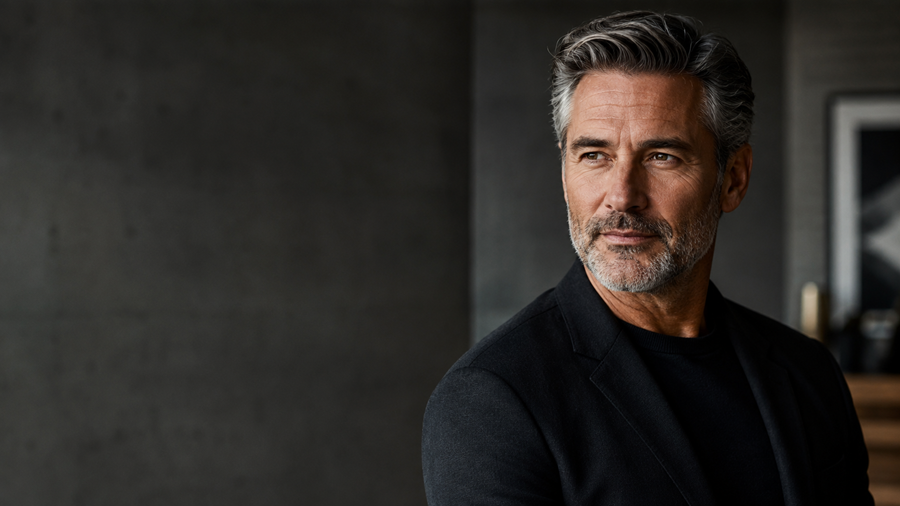
The most distinguished men rarely look as though they are trying to conceal their age, because their confidence comes from carrying it well. Their hair may contain gray, their face may show experience, and their style may have evolved beyond trends, yet everything appears deliberate. The haircut suits the face he has now, the beard is shaped rather than ignored, the clothes fit his current body, and the grooming routine enhances his appearance without attempting to rewrite his history.
Looking sharp after forty is less about erasing signs of age and more about refining the details that remain within your control. Healthy-looking hair matters more than hair that appears artificially dark, while a well-maintained beard often creates a stronger impression than one that has been colored aggressively but left dry or unruly. Clothes that fit properly are more persuasive than expensive labels, and posture, energy, eye contact, and presence often communicate more than any attempt to imitate a younger man’s style.
This is where maturity becomes an advantage, because a man who knows himself no longer needs to experiment with every trend or seek constant approval from the people around him. He can make quieter and more confident decisions, choosing the haircut that works, the products he will actually use, the clothing that feels appropriate, and the routines that support the life he wants to lead.
The goal is not to walk into a room and have people wonder how old you are. The goal is to enter with enough confidence, composure, and self-possession that your age becomes one of the least interesting things about you.
Midlife Confidence Is Built Through Alignment
Confidence after forty often has less to do with appearing impressive and more to do with feeling aligned. A man feels steadier when the way he lives, the way he presents himself, and the standards he claims to value are moving in the same direction. If he says health matters but consistently ignores his body, if he says discipline matters but abandons every routine, or if he says he values himself while treating his own needs as permanently optional, that contradiction eventually affects the way he carries himself.
Alignment does not require perfection, because no man maintains every habit, relationship, or responsibility without periods of inconsistency. It simply requires enough honesty to notice when the life you are living no longer reflects the man you want to be, followed by the willingness to correct one manageable area at a time.
Sometimes that correction begins with returning to exercise after months of inactivity, scheduling the appointment that has been postponed, improving sleep, reconnecting with a friend, or creating firmer boundaries around work. At other times, it begins with something as ordinary as replacing a worn-out wardrobe, trimming a neglected beard, choosing a haircut that works with changing hair texture, or developing a grooming routine that allows the reflection in the mirror to feel familiar again.
These actions may appear cosmetic from the outside, but their emotional effect can reach much deeper, because every small act of self-care reinforces the belief that your life is still worth participating in fully. A man who begins showing up for himself often discovers that he becomes more available to the people around him, not because grooming or clothing transformed his character, but because renewed self-respect creates energy that neglect had slowly drained away.
Gray Hair Is Not the Problem
Gray hair becomes emotionally complicated when it is treated as evidence that a man is losing something he cannot recover. In reality, gray is simply one visible part of aging, and the decision to keep it, reduce it, or manage it gradually should remain personal rather than moral.
Some men look exceptional with a fully silver head of hair and feel no desire to change it, while others prefer less contrast because a darker shade feels more consistent with their features, energy, or professional presentation. Neither choice reveals greater confidence, because confidence is not determined by whether a man keeps his gray; it is reflected in whether he makes the decision deliberately rather than allowing fear, shame, or outside expectations to make it for him.
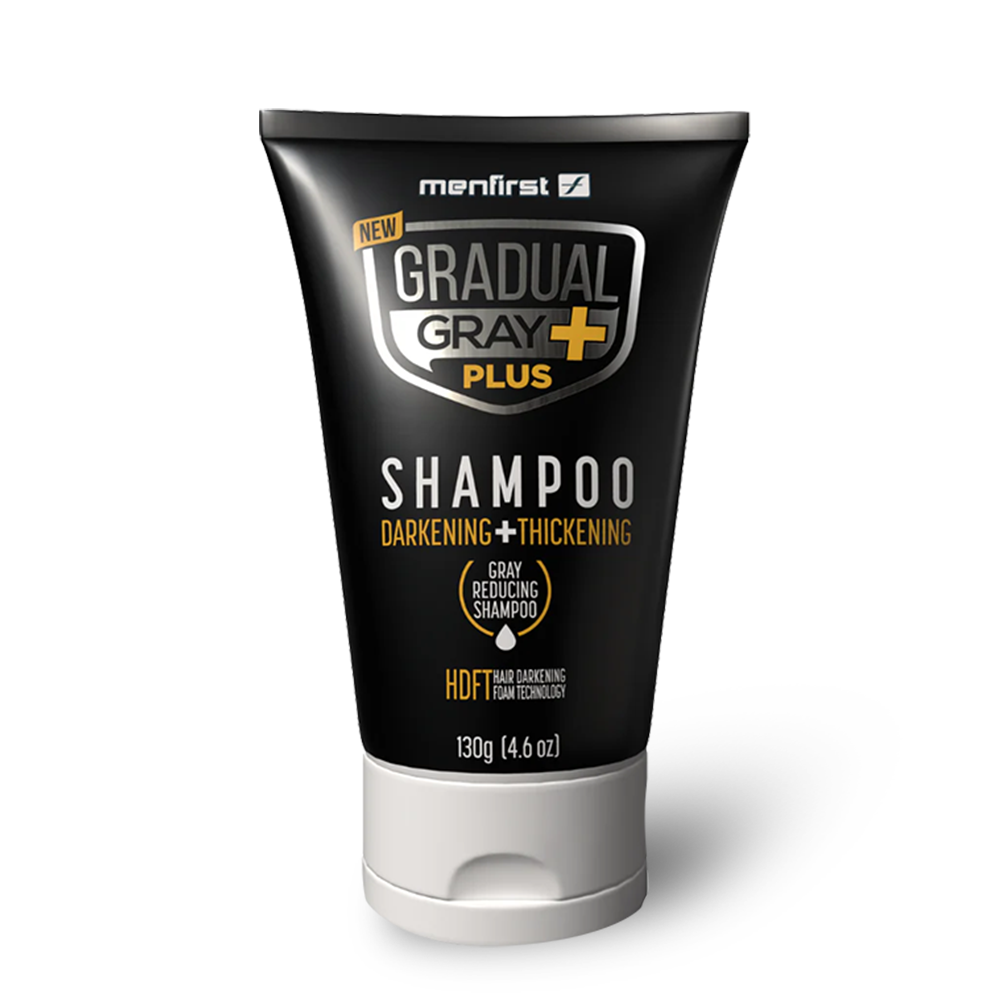
The mistake is assuming that reducing gray must involve chasing youth. A man can use a gradual-darkening shampoo without pretending to be twenty-five, just as he can shape his beard, whiten his teeth, improve his fitness, or choose a better-fitting jacket without denying the years he has lived. These are choices about presentation, not attempts to erase identity.
The most natural result does not make a man look like a younger stranger, because it helps him look like a more polished version of himself. The change should feel believable enough that people notice greater energy or refinement without focusing on the product, treatment, or grooming decision that created it.
The Sharpest Version of You Already Exists
The language of transformation has convinced many men that improvement requires becoming someone entirely different. They are encouraged to chase dramatic weight loss, expensive wardrobes, aggressive cosmetic changes, and complicated routines that promise to rebuild confidence from the outside inward. While significant changes can sometimes be useful, lasting self-respect is rarely created through a performance that feels impossible to maintain.
The sharper version of a man already exists within the way he speaks when he is confident, the standards he keeps when he is disciplined, the attention he gives when he is present, and the care he takes when he remembers that his own well-being deserves consideration. Grooming does not manufacture that man, because it simply gives his outward appearance a chance to reflect what is already there.
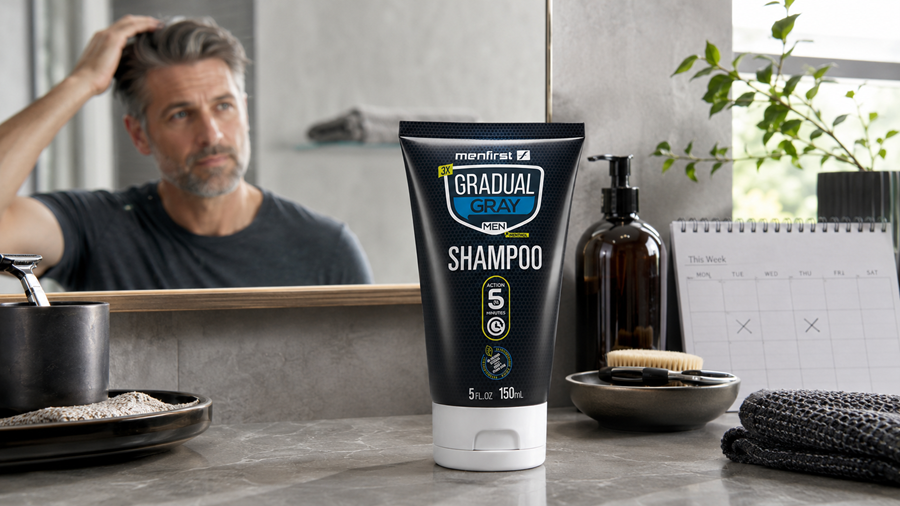
This is why the strongest routines tend to be simple. A shampoo that supports the shade and condition of the hair, a beard product that softens and controls coarse strands, a pomade that provides a clean finish, and a few reliable habits can create more impact than a bathroom shelf crowded with products that sounded promising but never became part of daily life.
Menfirst was built around this idea: grooming should support confidence without becoming a disguise, while every product should help a man look maintained, intentional, and recognizably himself. The purpose of the lineup is not to help men escape age, because it is to help them carry age with greater confidence and control.
Maturity Has Its Own Presence
There is a kind of presence that cannot be purchased or imitated, because it develops when a man has lived long enough to understand that he does not need to dominate every conversation, prove every point, or earn approval from every room he enters. He becomes more selective about his attention, more protective of his peace, and more aware that the strongest impression often comes from calm rather than performance.
That presence becomes more compelling when his appearance supports it. A clean haircut, a controlled beard, well-maintained hair, clothes that fit, and a composed physical presence do not replace character, yet they remove unnecessary distractions and allow maturity to speak without interference.
The confident man in his forties or fifties does not need to compete with the man he was at twenty-five, because they are not pursuing the same life. The younger man may have possessed more effortless energy, fewer obligations, and a face untouched by time, but the older man can possess discernment, stability, experience, and a deeper understanding of who he is when nobody is applauding.
Owning your age means recognizing that what you have gained deserves as much attention as what has changed. The years may have altered your hairline, beard, body, or face, but they may also have strengthened your judgment, refined your values, and clarified the kind of man you want to be.
Stop Looking Backward for Proof That You Still Matter
Midlife can create the temptation to evaluate the present against a younger photograph, as though the best evidence of vitality must always come from the past. A man looks at an image from twenty years earlier and remembers the body, hair, and freedom he once had, while forgetting the uncertainty, unfinished identity, and lack of perspective that often accompanied them.
The purpose of personal growth is not to return to an earlier version of yourself, because it is to become more fully the man that earlier version was trying to build. Your value does not decrease because your appearance has changed, and your confidence does not need to depend on recreating a stage of life that served its purpose and ended.
The more useful question is not whether you can still look twenty-five, but whether you are taking care of the man you are today. Are you protecting your health, maintaining meaningful relationships, setting boundaries, keeping promises to yourself, and presenting yourself with enough intention that your appearance reflects rather than contradicts your inner life?
Those questions create a far more substantial form of confidence than any attempt to reverse time, because they direct your attention toward the life still available to you rather than the years that have already passed.
This Is Menfirst
Menfirst is not built around the belief that age should be hidden, because it is built around the belief that men deserve to feel confident at every stage of their lives. Our products are tools for refinement rather than reinvention, designed for men who want to manage gray, improve texture, maintain their beard, and present themselves with intention without pretending to be someone they are not.
We believe self-respect is not vanity, confidence is not arrogance, and caring for your appearance does not diminish the responsibilities, relationships, or values that define you. Looking sharp can become one part of a much larger commitment to showing up with presence, discipline, and pride in the man you have become.
You are not chasing twenty-five, because you have already lived beyond him, learned what he could not know, and built a life he had not yet imagined. The opportunity now is not to look backward with regret, but to move forward with enough confidence to own every part of the person those years created.
Forty-five does not need to imitate twenty-five in order to look good. When carried with maturity, intention, and self-respect, it can look far better.
Discover the Menfirst philosophy and a grooming lineup designed to help you look like the sharpest version of the man you already are.
This Is Menfirst →

Leave a comment
All comments are moderated before being published.
This site is protected by hCaptcha and the hCaptcha Privacy Policy and Terms of Service apply.