



You leave the house feeling satisfied with your hair, only to catch your reflection somewhere else and wonder whether the color has changed since breakfast. The gray that seemed neatly blended in your bathroom suddenly looks more noticeable at the office, while a photograph taken that evening seems to tell an entirely different story.
When you have been using a gradual-darkening shampoo, that inconsistency can be frustrating, especially after spending several weeks finding a shade that feels right. It is tempting to assume that you need another application, a different formula, or a more aggressive routine, even though you may be comparing your hair under completely different conditions.
Before you change what you are doing in the shower, it is worth changing how you assess the result. The purpose is not to find a mirror that flatters you, but to establish a fair comparison that helps you distinguish a change in your hair from a change in the way you are seeing it.
Your Hair Color Is Only Part of What You See
The color you perceive depends partly on the light illuminating it, which is why an object photographed under a warm indoor bulb can look different from the same object photographed beside a window. Warmer light can introduce yellow or orange tones, while other lighting conditions can produce a cooler appearance, changing the overall impression without changing the object itself.
Hair adds another layer to that picture because its appearance depends on how light interacts with individual strands. Research into light scattering from human hair has demonstrated that visible reflections vary with the orientation of the fibers, helping explain why highlights can shift as the lighting, viewing angle, or position of the hair changes.
For your grooming routine, the useful distinction is between the color of your hair and the conditions under which you are judging it. When you compare one reflection with another, you may be changing the light source, the direction of the light, your viewing angle, and your hairstyle at the same time, leaving you with too many moving parts to draw a reliable conclusion.
A brighter-looking patch around the temple may deserve a closer look, but one reflection is not enough to tell you whether your routine needs adjusting.
Your Phone Is Not a Neutral Witness
Taking a photograph can seem like the simplest way to settle the question, although a camera introduces its own interpretation of the scene. Automatic white balance evaluates the lighting and adjusts the recorded colors, which means two photographs can differ even when neither has been deliberately edited. Nikon's photography guidance illustrates how different white-balance settings can produce noticeably different color renderings of the same scene.
Brightness and contrast adjustments can also change what stands out in a picture, particularly when lighter highlights or darker areas are emphasized. Adobe's editing guidance explains that exposure changes overall brightness, while highlight, shadow, and contrast controls alter the balance between lighter and darker areas, making these settings important variables when comparing photographs.
Consider the difference between a close-up taken under a bathroom light and a photograph someone takes of you across a restaurant table. Even before you consider your hair, the lighting, distance, framing, and camera settings are different, so treating those two pictures as a precise progress comparison asks them to do a job they were never set up to perform.
Your phone can still be useful, provided you use it as a consistent record rather than expecting every photograph to be an exact measurement of your shade.
Create One Reliable Place to Check Your Color
A practical starting point is to choose one place where you can take a clear photograph under reasonably consistent lighting. Soft window light can be convenient, particularly when it is filtered rather than falling directly onto your hair, because diffused light reduces the harshness of the highlights and shadows created by a more concentrated source.
Daylight is not perfectly constant, however, so try to use a similar time of day and avoid comparing a bright, sunny photograph with one taken in very different weather. A repeatable indoor setup is another option when it is easier to keep the same light, position, and background from one photograph to the next.
For this comparison, keep your hair in a similar condition as well: dry, arranged in your usual style, and photographed either before finishing products or after the same familiar finishing routine. The point is to avoid introducing a new hairstyle, a different product, or a different stage of getting ready into a comparison that is supposed to be about color.
You do not need professional equipment or a bathroom rebuilt around photography, because the value comes from reducing obvious differences rather than creating laboratory conditions. One familiar place, one camera, and a repeatable way of standing will give you a more useful reference than a collection of unrelated selfies.
Look for a Pattern Rather Than Reacting to One Picture
Choose an occasional check-in, such as a weekly photograph, so you have a simple record without making your hair another thing that demands attention throughout the day. This is a suggestion for observing your results, not a recommendation to change how often you use your shampoo.
At each check-in, take a front view and a side view with similar framing, and keep the original photographs without filters or color adjustments. Note anything that could make the comparison less straightforward, such as a haircut, a different styling product, a change in lighting, or an interruption to your usual routine.
When you review the photographs, ask a more useful question than whether you can still find a gray strand: does the overall shade appear to be moving in a consistent direction under comparable conditions? You may prefer a softer contrast while retaining some silver, or you may want a darker finish, but either choice is easier to assess when you know what result you are looking for.
If one photograph looks dramatically different while the surrounding comparisons appear similar, repeat the check before making a decision. If the same change appears across several reasonably comparable photographs, you have a clearer observation to bring to your next review of the product directions or a conversation with customer support.
Keep Your Color Check Separate From Your Application Routine
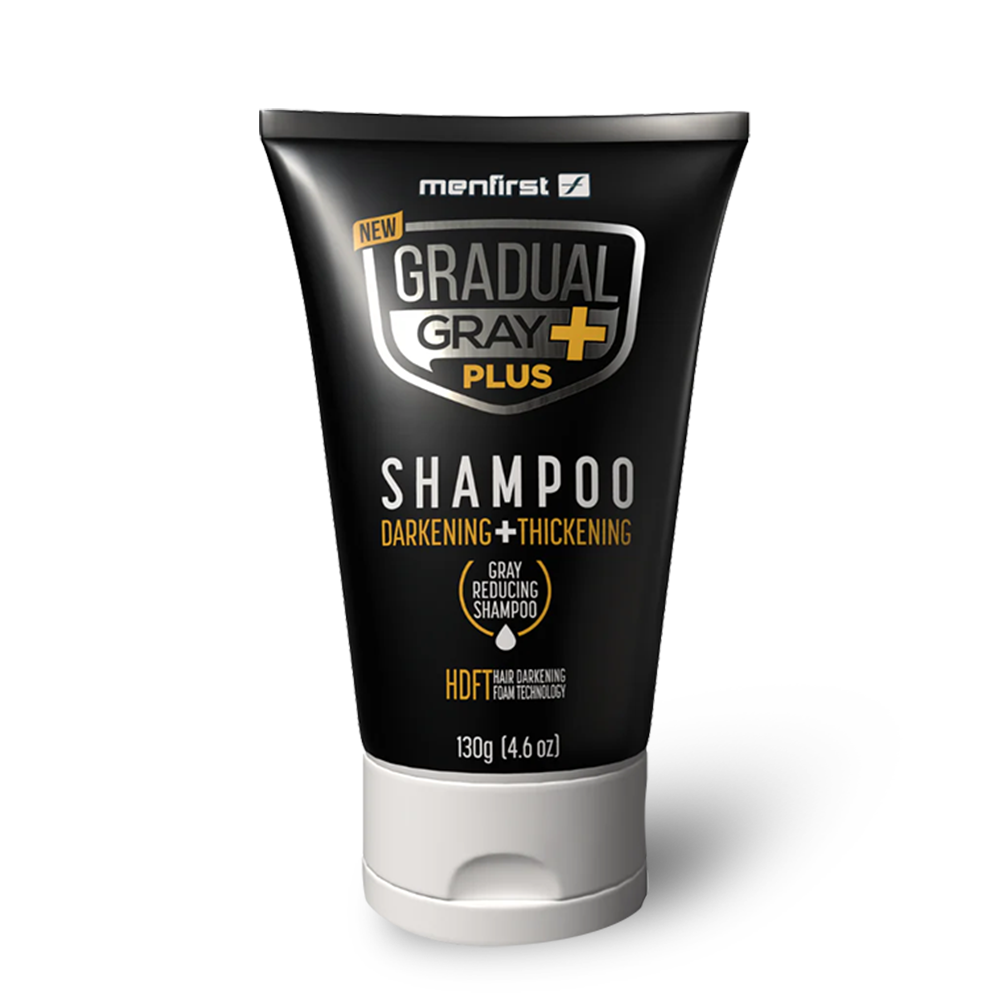
Menfirst Gradual Gray 3-in-1 Shampoo is designed to cleanse, condition, and gradually darken gray strands with repeated use. That gradual approach makes it especially useful to evaluate the result over time rather than treating every unfamiliar reflection as a reason to apply more product.
When you are ready to review your routine, return to the directions for the exact product you own, including its application method, contact time, and maintenance guidance. A photo-check routine should help you understand your experience; it should not become an improvised set of product instructions.
This distinction also prevents an unnecessary purchase. You may discover that you are satisfied with the shade under your usual comparison conditions, in which case a different formula is not automatically the next step. Where the result genuinely differs from what you want, clear photographs and a record of how you have been using the product give you a more useful starting point for asking questions.
Good guidance should help you make a considered decision, rather than persuade you that every uncertainty requires another bottle.
Choose a Result You Enjoy, Not One You Have to Defend
There is no requirement for your hair to look completely free of gray before you can consider your routine successful. You are allowed to prefer some natural variation, just as you are allowed to choose a deeper shade, without turning that preference into a judgment about your age or appearance.
The more useful standard is whether the result feels right in your everyday life, rather than whether it looks identical in every photograph or reflection. Establishing a consistent comparison gives you somewhere sensible to return when you are unsure, while leaving you free to spend the rest of the week thinking about things other than your hair.
At Menfirst, we believe grooming should support the way you want to show up without becoming a constant project. Before changing a routine that may already be working, give yourself the benefit of a fair comparison, a clear goal, and enough information to understand what you are actually seeing.
Explore Menfirst Gradual Gray 3-in-1 Shampoo and review the product directions for the routine you already use.
Review Your Shampoo Routine →



Leave a comment
All comments are moderated before being published.
This site is protected by hCaptcha and the hCaptcha Privacy Policy and Terms of Service apply.