



There is a particular moment in midlife when the mirror begins to feel less like an object and more like a messenger, quietly revealing changes that daily life has been too busy to notice. For many men, that moment begins with the beard, where a handful of silver strands appear around the chin, along the jawline, or beneath the lower lip while the hair on the head remains largely unchanged. The contrast can feel surprisingly sudden, even when the transformation has been happening gradually, because beard hair has a way of making every shift in color appear more pronounced than it truly is.
Although scalp hair and facial hair grow on the same body, they do not behave in the same way, age according to the same timetable, or respond identically to grooming products. Beard hair is usually thicker, coarser, and more textured than the hair on the scalp, which means it catches the light differently and creates stronger visual contrast when pigment begins to fade. A few gray strands in a beard can therefore appear far more noticeable than a much larger number of gray hairs on the head, especially when they are surrounded by darker, denser facial hair.
Why the Beard Often Changes First
Hair receives its natural color from melanin, which is produced by pigment-forming cells located within each follicle. As men age, those cells gradually become less active, and each new strand may grow with less color than the one before it. Genetics plays the most important role in determining when this process begins, although hormonal changes, oxidative stress, nutritional deficiencies, smoking, and certain health conditions may also influence how quickly pigment fades.
Beard follicles, however, are not identical to scalp follicles, which helps explain why facial hair may begin losing pigment sooner or develop an uneven mixture of dark, gray, and white strands. The beard is influenced strongly by androgens, grows in a rougher texture, and often follows its own pattern of aging, which is why one section may remain dark while another becomes noticeably silver. Rather than changing in one uniform wave, a beard often loses color in scattered areas, creating the patchy salt-and-pepper appearance that many men notice long before their scalp hair begins to look gray.
This change is not necessarily evidence that the beard is aging faster than the rest of the body, because it is often simply the first place where reduced pigmentation becomes visible. The thickness of each strand, the contrast against the skin, and the prominent position of the beard on the face all make the transition difficult to overlook, particularly under bright bathroom lighting or in photographs where every silver hair seems to reflect more light than the darker strands surrounding it.
Why Beard Hair Darkens Differently
The same qualities that make gray beard hair more visible also make it more difficult to color naturally. Coarse facial hair does not always absorb pigment as evenly as softer scalp hair, which means traditional dyes may produce a result that looks too dark, too flat, or noticeably different from the natural variation that gives a beard its character. The skin underneath also creates another complication, because any product applied to the beard inevitably comes into contact with the face, where sensitivity, dryness, shaving irritation, and existing skin conditions can make harsh formulas uncomfortable.
Traditional oxidative dyes are designed to create a substantial color change during a single application, which may be useful for someone seeking immediate coverage but can feel excessive for a man who simply wants the gray to appear less prominent. The sudden contrast can make the result obvious, particularly when the beard shifts from salt-and-pepper to one uniform shade in a matter of minutes, while repeated applications may leave the skin beneath the beard feeling dry, tight, itchy, or irritated.
For many men, the problem is therefore not a lack of options, but the fact that those options demand too much commitment, create too much mess, or produce a result that does not feel believable. They are not trying to erase every sign of age or return to the face they had at twenty-five, because they simply want their beard to look more balanced, healthier, and closer to the natural color they still recognize as their own.
A More Gradual Approach
A gradual beard-darkening routine works according to a different philosophy, because instead of forcing the beard into a dramatically darker shade during one application, it allows color to build progressively with repeated washing. This approach gives the user greater control over the final appearance, since the beard becomes slightly richer in tone over time and the routine can be adjusted according to personal preference.
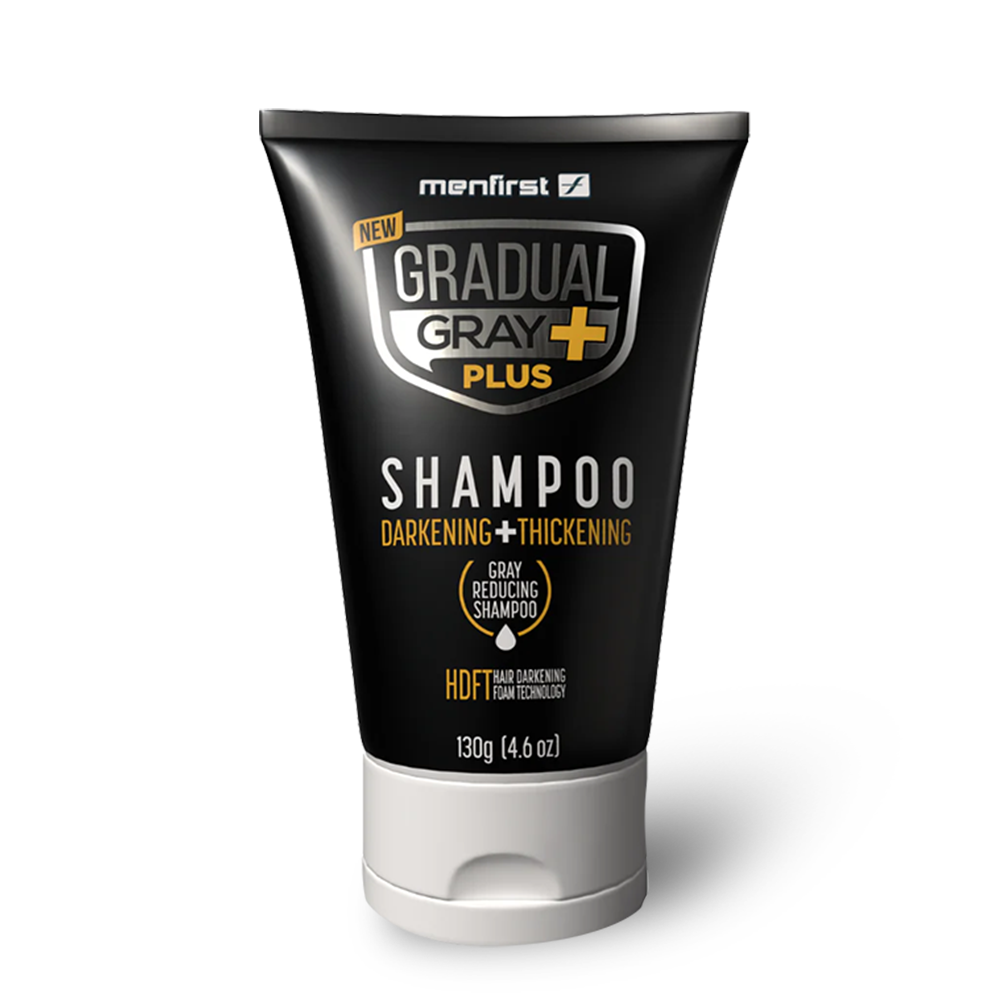
Menfirst Gradual Gray Darkening Beard Wash uses a gentle cationic pigment approach, which allows color to adhere gradually to the hair with each wash rather than relying on the harsh oxidation process associated with conventional dyes. Because the change develops progressively, the beard can retain the natural variations in tone that make it look authentic, while the daily routine remains as simple as using an ordinary beard cleanser.
There is no separate coloring session to schedule, no complicated mixture to prepare, and no dramatic overnight transformation that invites questions from everyone you see the following morning. The product is incorporated into the routine a man already follows, which makes consistency easier and allows the result to emerge in a way that feels understated rather than artificial.
The Skin Beneath the Beard Matters
It is easy to focus entirely on the appearance of facial hair while forgetting that every beard grows from living skin, which must remain comfortable and healthy if the beard itself is going to look its best. The skin beneath facial hair is exposed to product buildup, sweat, shaving, weather, and friction throughout the day, which is why aggressive coloring treatments can create problems that extend far beyond the final shade.
Menfirst Gradual Gray Darkening Beard Wash is formulated to be hypoallergenic and free from the harsh chemical process commonly associated with traditional oxidative dyes, making it a gentler option for men who are concerned about the skin beneath their beard. The purpose is not simply to place pigment on the hair, but to support a grooming routine that cleanses the beard while gradually reducing the contrast of gray strands without turning self-care into an uncomfortable monthly ritual.
A beard should never look better at the expense of the skin underneath it, because irritation, dryness, and discomfort will eventually make even the most effective product difficult to continue using. A sustainable routine should respect both the beard and the face, allowing the user to care for his appearance without feeling that he must choose between visible results and everyday comfort.
Looking Like Yourself Does Not Mean Looking Younger
The conversation around gray hair often becomes unnecessarily tied to youth, as though every man who chooses to darken his beard must be afraid of aging or unwilling to accept the life he has lived. In reality, grooming is deeply personal, and the desire to change one aspect of your appearance does not mean rejecting the person you have become.
A man may feel entirely comfortable with his age while still preferring the way his beard looks with less gray, just as he may choose a particular haircut, shave his head, trim his beard, or wear clothes that help him feel more confident. None of those decisions require an apology, because self-respect and vanity are not the same thing, and taking care of your appearance can be one of the quiet ways you remind yourself that your needs still matter.
Midlife often asks men to carry more responsibility while giving themselves less attention, because careers become more demanding, families depend on them in new ways, parents grow older, and time begins to feel increasingly scarce. Under those conditions, grooming can seem insignificant, yet the routines a man maintains for himself often influence how he enters the rest of his life, whether he is walking into a meeting, spending time with his family, or simply looking at his reflection before another busy day begins.
The goal is not to remove every trace of time from the face, because a mature appearance can carry strength, experience, and character that youth cannot imitate. The goal is to make deliberate choices about how you want to present yourself, rather than assuming that neglect is the only respectable response to getting older.
A Routine That Works With You
The reason gradual darkening appeals to so many men is that it removes the pressure to make one dramatic decision. Instead of committing to a fixed shade or an immediate transformation, you can allow the color to build at a pace that feels appropriate, observe the result over time, and maintain a level of gray that still feels natural.
Menfirst Gradual Gray Darkening Beard Wash was created for that kind of routine, where the product works quietly in the background while the man using it remains in control of the outcome. With consistent use, the beard gradually develops a deeper, more balanced appearance, while the absence of harsh oxidation makes the experience feel closer to grooming than conventional dyeing.
Your beard may have gone gray before the hair on your head, but that does not mean you have to choose between leaving it untouched and covering it with an obvious, one-dimensional color. A more gradual approach allows you to preserve the character of your beard while softening the contrast that made the gray feel more noticeable in the first place.
Discover how Menfirst Gradual Gray Darkening Beard Wash gradually darkens coarse facial hair while remaining gentle on the skin underneath.
How Beard Darkening Works →



Leave a comment
All comments are moderated before being published.
This site is protected by hCaptcha and the hCaptcha Privacy Policy and Terms of Service apply.