



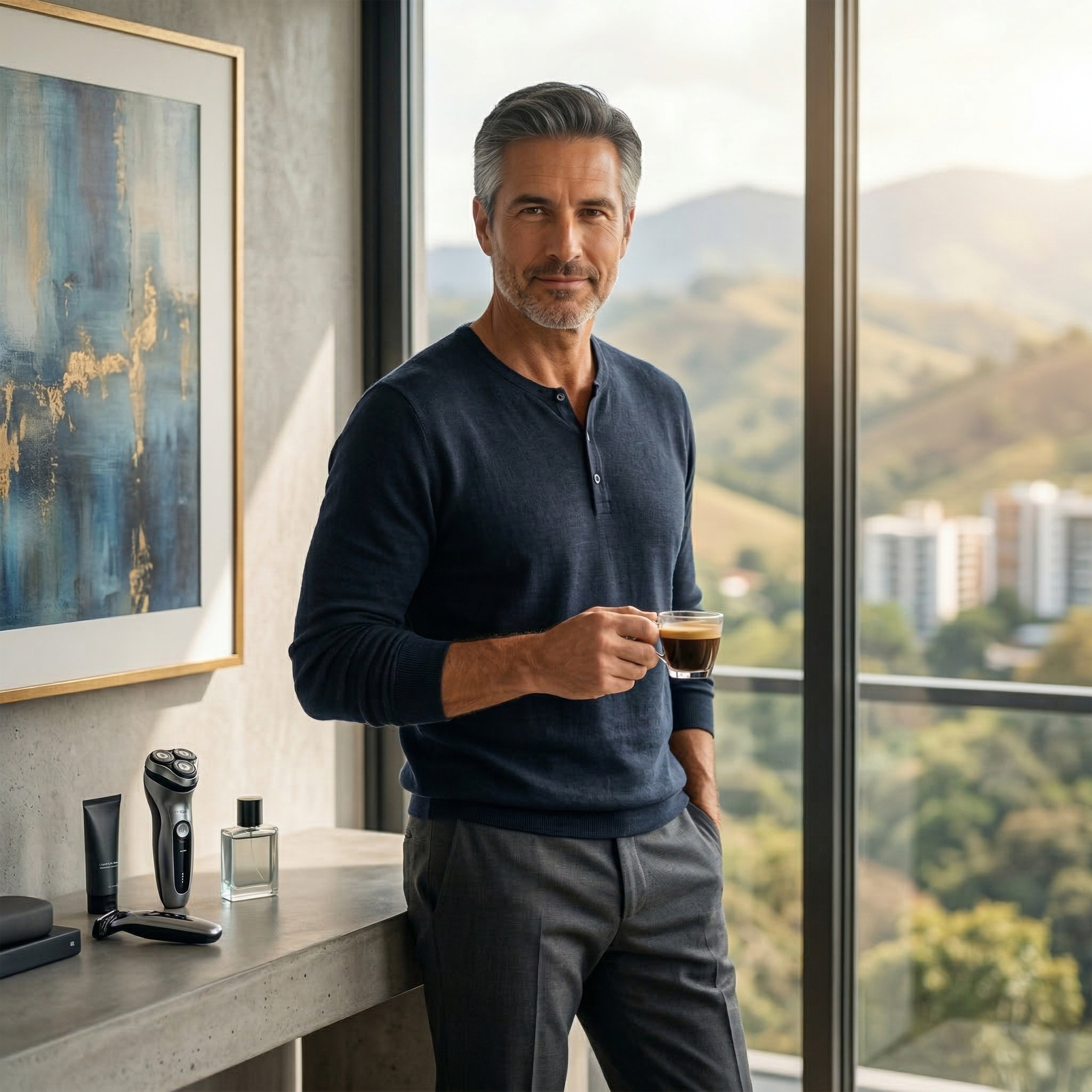
Two men, same age, similar gray coverage. One walks into a room with complete confidence. The other feels self-conscious and dated.
What's the difference?
It's not the amount of gray. It's not genetics or luck. It's not even how "good" they objectively look.
The difference is agency—the feeling that you're in control of your appearance rather than your appearance controlling you.
This is the gray hair confidence gap, and understanding it changes everything.
The Confidence Research
Dr. Carol Dweck's research on mindset at Stanford revealed something applicable far beyond its original scope: people with a "growth mindset" (believing they can influence outcomes) consistently outperform those with a "fixed mindset" (believing outcomes are predetermined).
This applies directly to gray hair.
Fixed mindset about gray: "I'm going gray and there's nothing I can do about it. I guess I just have to accept looking older."
Growth mindset about gray: "I'm going gray and I have options. I can manage this strategically to look the way I want to look."
Same biological process. Completely different psychological experience.
Men with the growth mindset don't struggle with confidence around their gray because they feel in control. Men with the fixed mindset struggle not because of the gray itself, but because they feel powerless.
Why Some Men Struggle
1. They believe gray is inevitable and unmanageable
If you think gray hair is something that "happens to you" and your only options are "accept it completely" or "cover it desperately with harsh dyes," you're stuck between two unappealing choices.
That's not a confidence position. That's resignation.
2. They conflate gray hair with aging poorly
Society sends mixed messages: some gray is "distinguished," but too much gray means you're "past your prime." Without clear guidance, men internalize confusion and anxiety.
3. They've tried solutions that failed
Many men experimented with traditional dyes, hated the obvious results, and concluded "there's nothing that works." They're not wrong about harsh dyes—they just don't know about better alternatives.
4. They lack a clear vision of their optimal outcome
"I don't want to look old" isn't a vision—it's avoidance. Without knowing what you do want (distinguished but vital? some gray but not overwhelming?), you can't make strategic decisions.
5. They absorb negative feedback loops
"Are you tired?" "You look stressed." "Rough week?" When people repeatedly ask these questions (even when you feel fine), it erodes confidence in your appearance—especially if you don't know how to address it.
Why Some Men Don't Struggle
1. They view gray as manageable, not inevitable
Men who maintain confidence see gray as one more aspect of appearance they can optimize—no different than fitness, grooming, or style. It's just another variable to manage strategically.
2. They have a clear vision of their target outcome
"I want to look distinguished with some gray, but not overwhelmingly gray" is a specific, achievable goal. Clear vision enables clear action.
3. They use tools that actually work
Gradual darkening systems that deliver natural results remove the "nothing works" frustration. When men find solutions that work, confidence follows naturally.
4. They separate aging from neglect
These men understand that looking age-appropriate is good—looking neglected is not. Gray itself isn't the problem. Unmanaged, unkempt, or excessive gray becomes the problem.
5. They practice agency
Every morning when they use their gradual system, they're reinforcing "I control this" rather than "this is happening to me." That psychological reinforcement compounds confidence over time.
The Agency Shift
Here's the shift that closes the confidence gap:
Before agency: "I'm going gray and I look tired and there's nothing I can do about it."
After agency: "I'm managing my gray strategically to maintain the distinguished-but-vital look I want."
Same biological process. Completely different psychological experience.
The confidence doesn't come from having no gray—it comes from feeling in control of your gray ratio.
The Confidence Compound Effect
When you shift to strategic gray management, confidence compounds in surprising ways:
Week 1: "I'm doing something about this" (agency itself is confidence-building)
Week 2-3: "I can see this is working" (visible progress reinforces commitment)
Week 4+: "I look the way I want to look" (outcome matches intention)
Month 3+: "This is just how I maintain myself" (sustainable confidence becomes baseline)
By month 6, the confidence isn't about your gray management system—it's integrated into your self-concept as someone who maintains intentional standards.
The Professional Impact
The gray hair confidence gap shows up most prominently in professional settings:
Men who struggle:
- Avoid updated photos (LinkedIn, company directory)
- Feel less confident in video calls or presentations
- Wonder if age bias is affecting opportunities
- Experience appearance anxiety in high-stakes meetings
- Notice younger colleagues getting opportunities they're qualified for
Men who don't struggle:
- Maintain current, confident professional photos
- Show up fully present in video and in-person meetings
- Project capability independent of age concerns
- Focus mental energy on performance, not appearance anxiety
- Command rooms with confident presence
The professional opportunities don't necessarily change—but the confidence to pursue and win them does.
Closing Your Confidence Gap
If you identify with the "struggle" side of this equation, here's your path forward:
1. Adopt a growth mindset about your gray
Your gray is manageable. You have options. You can influence the outcome. This is the foundational belief shift.
2. Define your target outcome specifically
"Distinguished with some gray, but not overwhelmingly gray" or "more pepper than salt" or "vital and age-appropriate." Get specific.
3. Use tools that actually work
Gradual systems deliver natural results that harsh dyes can't match. Stop using solutions that don't work and expecting different results.
4. Practice daily agency
Every time you use your gradual system, you're reinforcing "I control this." That psychological practice matters as much as the physical results.
5. Track your confidence progression
Notice how you feel in week 1 vs. week 4 vs. month 3. The compound effect is real, but you need to pay attention to it.
6. Celebrate wins
When someone says "you look great" or when you feel more confident in a meeting—acknowledge that. Positive feedback loops matter.
The Psychology of Control
Ultimately, the gray hair confidence gap isn't about your hair—it's about your sense of control.
Men who feel in control of their appearance feel more in control everywhere: career decisions, relationship dynamics, health choices, financial planning.
Men who feel their appearance is "happening to them" often feel that way about other aspects of life too.
Strategic gray management isn't just about looking better. It's about practicing agency in a visible, tangible way that reinforces your broader sense of control.
And that confidence? It shows up everywhere.
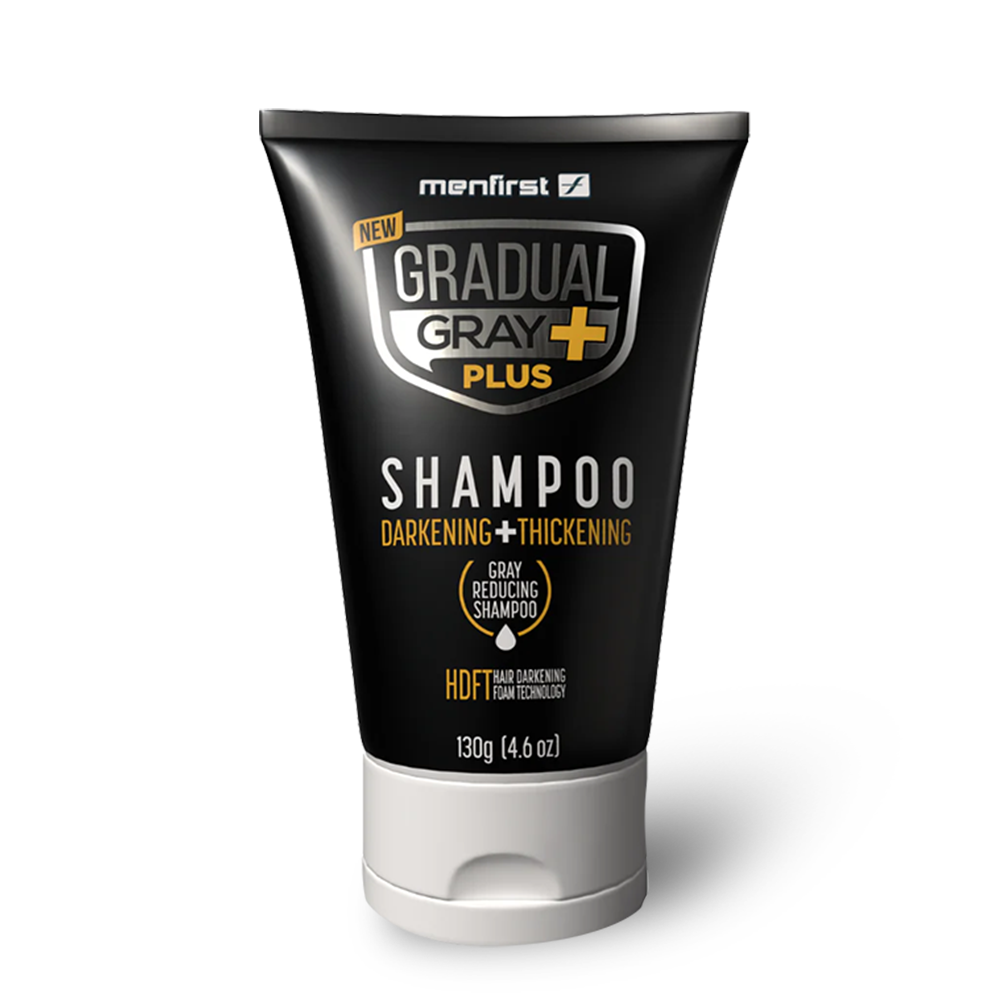
Ready to close your confidence gap? Discover MENFIRST's gradual system that gives you strategic control over your gray—because confidence comes from agency, not resignation.

Leave a comment
All comments are moderated before being published.
This site is protected by hCaptcha and the hCaptcha Privacy Policy and Terms of Service apply.