


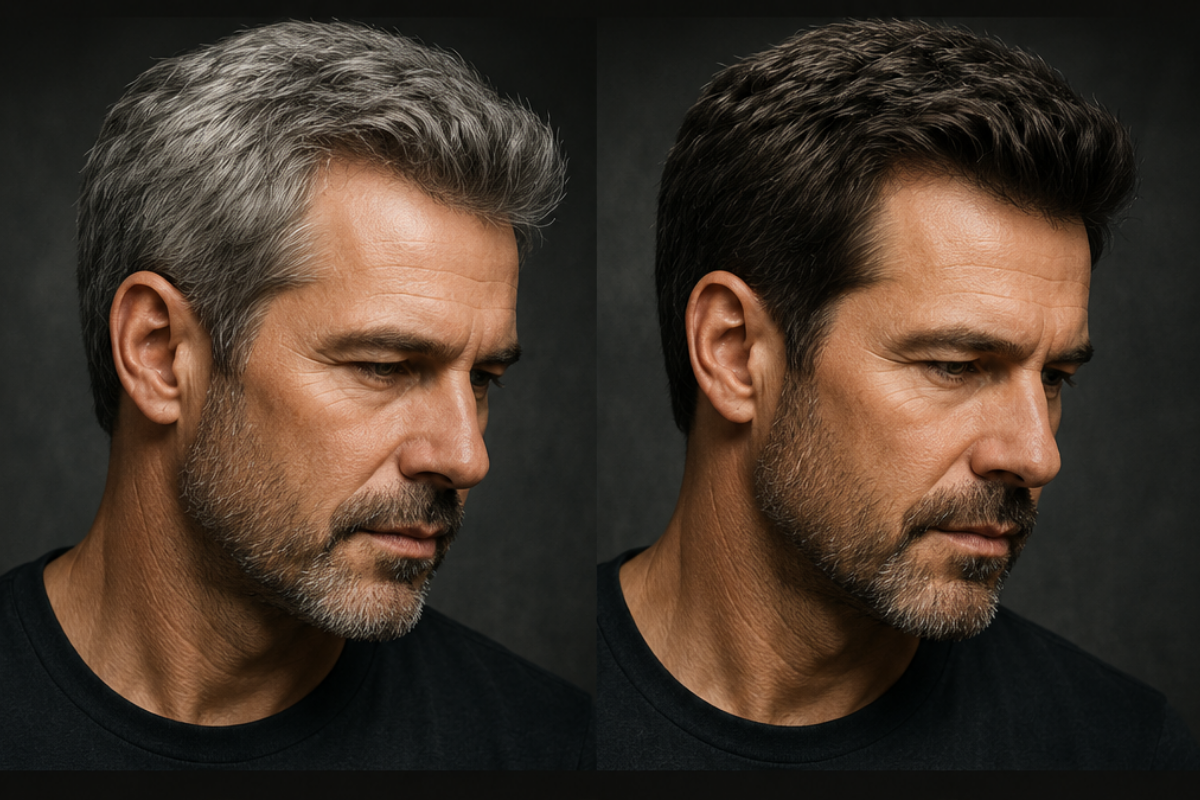
There is a particular kind of disappointment that can arrive after you have done everything correctly. You found a gradual gray routine that fit your life, used it consistently, watched the silver soften into a richer and more natural-looking shade, and reached the point where your hair color finally felt like your own again. Yet when you look in the mirror, the overall result may still feel incomplete, because although the gray is less noticeable, the hair itself can appear flatter, finer, or less substantial than it did several years ago.
This does not necessarily mean the gradual color failed, nor does it mean a new problem suddenly appeared. More often, the gray was simply the most visible change, and once that strong contrast began to fade, your attention shifted toward the texture, body, and fullness of the hair underneath it. What you are noticing now may have been developing quietly for some time, but the gray was loud enough to distract from everything else.
That is why darker hair is only half the story.
A polished, healthy-looking result depends not only on color, but also on how the hair feels, how it holds its shape, how evenly it covers the scalp, and whether the strands appear smooth and substantial rather than dry, weak, or separated. Solving the color problem can improve the first impression, but men who want a fuller-looking finish often need a routine designed to address more than pigment alone.
The Gray Was the First Thing You Noticed, Not Necessarily the Only Thing That Changed
Gray hair commands attention because contrast is one of the first things the eye detects. A few silver strands against darker hair can make the overall color appear less uniform, particularly around the temples and hairline, where changes tend to become visible quickly. When those gray strands are gradually darkened, the difference can feel immediate even though the transformation developed over several washes.
Once that contrast softens, however, the eye begins noticing other details. Hair that once seemed merely gray may also look flatter at the crown, less dense around the front, or more difficult to style into the shape it used to hold. Strands may separate more easily, lose their finish by midday, or lie closer to the scalp even after they have been washed and styled.
This change in perception is important because it prevents men from making the wrong correction. If the hair already has the shade you want, applying more and more pigment will not necessarily create the fuller appearance you are missing. Color can improve definition and reduce the distracting contrast of gray, but it cannot, by itself, solve every concern related to texture and body.
The next step is not always darker hair. Sometimes it is hair that looks stronger, smoother, and more substantial at the same shade.
Color and Fullness Influence Each Other, but They Are Not the Same
Darker hair often appears more defined because the individual strands are easier to see and the overall outline of the hairstyle becomes clearer. This is one reason reducing gray can make a man look more polished even when nothing else about his haircut has changed. A richer tone creates visual structure, especially when the gray had been scattered unevenly through the hair.
Fullness, however, is shaped by a different set of visual cues. The eye notices whether the strands hold volume, whether the hair falls together or separates into thin sections, whether the scalp becomes visible under strong lighting, and whether the surface looks smooth enough to reflect light evenly. Hair can therefore be darker and still look fine, just as hair can retain some gray while appearing thick, healthy, and well maintained.
The strongest result comes from addressing both concerns together, because color gives the hair definition while condition and texture determine whether that definition looks strong or flat. When the hair appears richer in tone and more substantial in texture, the improvement affects the entire face rather than simply changing the number of gray strands you can see.
Color changes what the eye notices first, while fullness changes the entire impression.
Fuller-Looking Hair Is Not the Same as Hair Regrowth
It is important to draw a clear distinction between a product that helps hair appear thicker and a medical treatment intended to address hair loss, because those are not interchangeable claims. A cosmetic shampoo cannot reverse every cause of thinning, restore dormant follicles, or promise the type of regrowth that belongs in a clinical conversation.
What a well-designed grooming formula can do is improve the way existing hair looks and feels. By supporting smoother, stronger-looking strands and helping the hair retain a more substantial appearance, it can make the overall style look fuller without pretending that it is replacing lost hair.
This distinction matters because men deserve honest solutions rather than exaggerated promises. If you are experiencing sudden, severe, or unexplained hair loss, the right step is to speak with a qualified medical professional. If your concern is that the hair you still have looks finer, flatter, or less polished than it once did, a formula created to support a fuller-looking finish may be a practical addition to your routine.
The goal is not to promise the impossible. The goal is to make the most of the hair you have while helping it look stronger, healthier, and better maintained.
Why Keratin Matters to the Appearance of Hair
Hair is largely made of keratin, a structural protein that contributes to the strength and form of each strand. Over time, ordinary washing, heat, styling, environmental exposure, and general wear can influence how smooth or rough the surface of the hair feels, which is one reason strands may begin looking less polished even when the underlying amount of hair has not changed dramatically.
A keratin complex in a grooming formula is intended to support the appearance and feel of the hair fiber, helping strands look smoother, stronger, and more substantial. When the surface of the hair is better conditioned, the strands tend to sit together more evenly, hold their style more effectively, and create a cleaner visual finish.
This does not mean keratin creates new follicles or permanently changes the biology of the hair. Its value lies in helping existing strands look and feel better, which can make a meaningful difference for men whose hair has become difficult to style or no longer carries the same body it once did.
When richer pigment and a keratin complex are combined in one formula, the routine begins addressing both sides of the visual equation. The pigment helps reduce the contrast of gray, while the conditioning and strengthening support helps the hair appear fuller and more refined.
Why More Pigment Can Make Sense After You Understand Gradual Color
The original Gradual Gray routine is designed for men who want a controlled introduction to gradual darkening, particularly those who prefer to observe the color developing slowly before deciding how far they want to take it. That measured approach is one of the reasons gradual color looks more believable than an overnight transformation, because it gives the user time to remain in control.
Once you understand how your hair responds, know the shade you prefer, and have become comfortable with the gradual-darkening process, your needs may change. You may want a richer result with fewer decisions, especially if you are maintaining an established shade rather than discovering it for the first time.
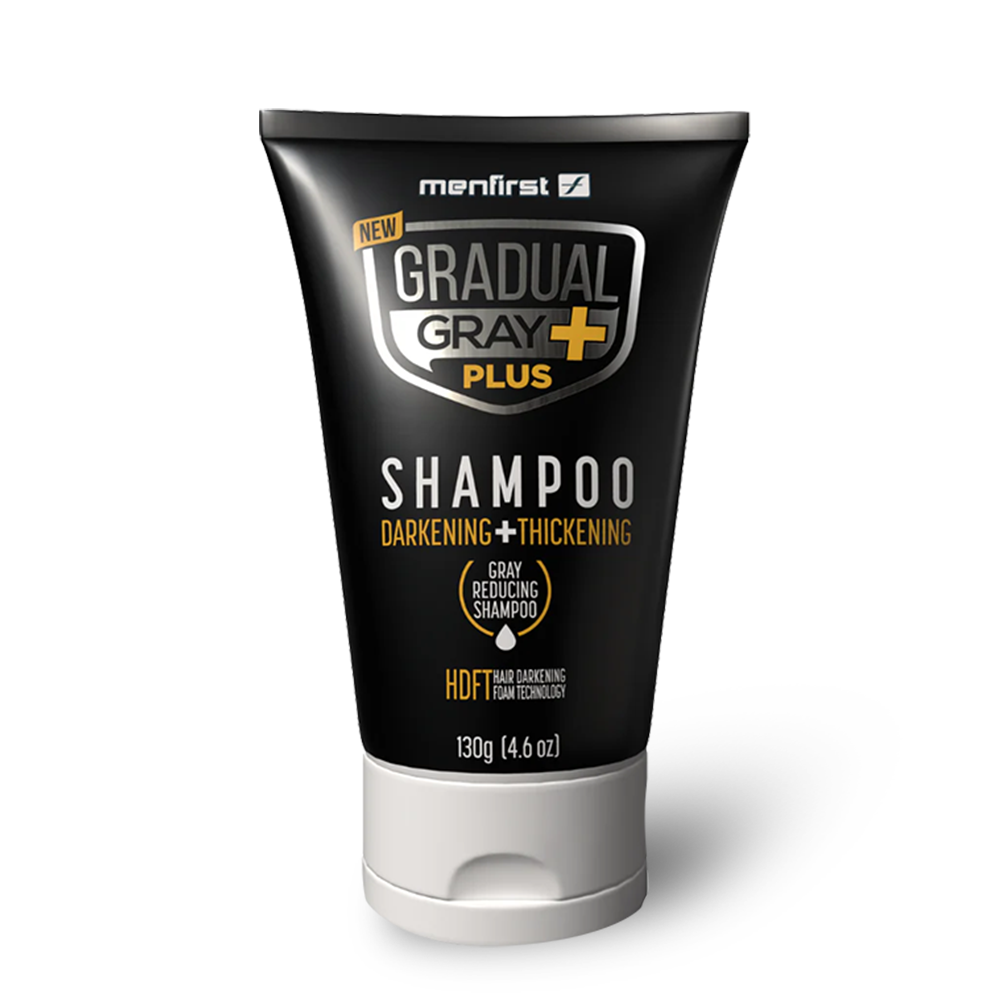
Menfirst Gradual Gray PLUS is formulated with 2X pigment, which makes it a stronger option for men who already understand gradual color and want more efficient pigment delivery as part of their routine. The purpose is not to force the hair into an unnaturally dark shade, but to offer a more concentrated next step for someone who knows what result he is trying to maintain or achieve.
The three-minute application also matters because an upgrade is only useful when it remains simple enough to continue. Men do not need another complicated treatment competing with work, family, travel, exercise, and the rest of daily life. They need a product that fits into a routine they have already proven they can maintain.
Who Gradual Gray PLUS Is Designed For
An honest recommendation begins by acknowledging that not every man needs to change products. If the original Gradual Gray 3-in-1 Shampoo is giving you the shade, texture, and routine you want, there is no reason to abandon something that is working simply because another formula exists.
Gradual Gray PLUS becomes relevant when your goals have expanded. You may already be comfortable with gradual darkening but want stronger pigment delivery, or you may have noticed that achieving the right shade did not fully address hair that looks finer, flatter, or less substantial. You may also prefer a fast three-minute application and want one product to support both richer color and a fuller-looking finish.
The decision should be based on the result you want rather than the assumption that the newest option is automatically the right one. Menfirst Gradual Gray 3-in-1 Shampoo remains the sensible choice for a controlled, straightforward gray-reduction routine, while Gradual Gray PLUS is designed for the man who wants to take the same gradual philosophy further by addressing color and fuller-looking texture together.
That distinction keeps the upgrade honest, because PLUS is not a replacement every customer suddenly needs. It is a more targeted option for men whose concerns have moved beyond gray alone.
Why the Ultimate Gray Coverage Kit Is the Smarter Upgrade
When you decide that Gradual Gray PLUS fits your next stage, the most sensible path is not always purchasing the standalone bottle without considering the rest of your routine. The Ultimate Gray Coverage Kit places PLUS inside a more complete grooming system, making it a stronger-value option for men who want their products to work together rather than collecting separate solutions over time.
A kit should not exist merely to increase the size of the order. Its value comes from reducing friction, bringing complementary products into one routine, and making it easier to maintain a consistent approach across the areas where gray and grooming concerns appear.
For repeat customers who already understand how gradual color fits into their lives, the Ultimate Gray Coverage Kit offers a practical way to expand the routine without beginning again from scratch. You are not buying a collection of unrelated products because they happen to be bundled together; you are choosing a system built around the same objective of helping your hair look darker, fuller, and more intentionally maintained.
This is what makes the kit feel like a progression rather than an upsell. It responds to the next question a loyal customer is likely to ask after reaching his preferred shade: how can I improve the overall result without making my routine more complicated?
Looking Fuller Is Not About Chasing Youth
Conversations about gray and thinning-looking hair often become trapped in the language of age, as though every grooming decision must be an attempt to look twenty-five again. That framing misunderstands what many men actually want.
A man in his forties, fifties, or beyond does not necessarily want to erase the years from his appearance, because those years have shaped his judgment, relationships, resilience, and identity. He may simply want the outside to reflect the energy, discipline, and confidence he still feels inside.
There is nothing shallow about preferring hair that looks darker, fuller, and better maintained. Grooming is not a rejection of age when it helps a man feel prepared for the life he is already living. It can be part of the same personal standard that influences the way he dresses, exercises, cares for his health, maintains his relationships, and shows up for the people who depend on him.
The goal is not to look like another man. The goal is to stop allowing avoidable neglect to speak on your behalf.
The Next Stage of the Routine
The first stage of gradual gray care is often about correcting the most visible concern, which is the contrast created by silver or white strands. Once that contrast is under control, the second stage becomes more refined, because you begin looking at the quality of the overall finish rather than the color alone.
If your hair now has the shade you want and still looks strong, manageable, and full enough for your preference, staying with the original Gradual Gray 3-in-1 Shampoo may be exactly the right decision. If the gray has softened but the hair still looks flat, fine, or less substantial than you would like, Gradual Gray PLUS offers a more complete response by combining 2X pigment with a keratin complex designed to support thicker, fuller-looking hair.
The smartest upgrade is not the one that gives you more products. It is the one that solves the next real problem without adding unnecessary complexity.
Darker hair can change what people notice first, but richer color combined with a fuller-looking finish can change the entire impression. That is the difference between treating gray as an isolated problem and building a grooming routine around the way you actually want your hair to look.
Meet Menfirst Gradual Gray PLUS inside the Ultimate Gray Coverage Kit and discover a smarter next step for hair that looks darker, stronger, and noticeably fuller.
Meet Gradual Gray PLUS →

Leave a comment
All comments are moderated before being published.
This site is protected by hCaptcha and the hCaptcha Privacy Policy and Terms of Service apply.